🌼 Introduction: Why This Change Became Necessary
Around 2018, we began noticing a clear shift in young learners.
Children were:
- More exposed to screens
- Less engaged in real conversations
- Struggling to focus for longer durations
And as educators, we asked ourselves:
👉 Is the traditional classroom model still working for this generation?
⚠️ The Reality of Today’s Childhood
Today’s children are growing up in a fast-paced world.
- Parents have limited time due to demanding schedules
- Children are introduced to screens as early as 1–2 years
- YouTube and digital content become primary engagement tools
I strongly resonate with what many child development experts emphasize today—early exposure to screens (especially between ages 1–5) can significantly impact brain development, attention span, and social behaviour.
Research and experts highlight that excessive screen time can lead to delays in language development, reduced social interaction, and attention-related challenges.
- Too much screen time is linked to:
- Attention problems
- Delayed language development
- Reduced social skills
- Poor sleep patterns
- Children actually learn better through:
- Real interaction
- Play
- Conversations with adults
🧠 How This Impacts Children
In classrooms, we began observing:
- Reduced attention span
- Difficulty in social interaction
- Lack of patience
- Dependency on visual stimulation
- Limited real-world exploration
After the pandemic, this became even more visible.
👉 Kindergarten children were deeply connected to gadgets
👉 The real world felt unfamiliar to them
💡 The Beginning of Workstation-Based Learning
This is when we introduced Workstation-Based Learning.
Initially in 2018, and its true impact became visible post-pandemic.
🧩 What is Workstation-Based Learning?
Workstation-Based Learning is a system where:
👉 Learning happens in subject-specific environments (learning zones)
👉 Children move from one workstation to another
👉 Each station is guided by a subject-specific teacher
🎯 Instead of:
- One classroom
- One teacher
- All subjects
✅ We created:
- Literacy Station
- Numeracy Station
- EVS Station
- Life Skills Station
- Art / Music / Story Station
🏫 How It Looks in a Real Classroom
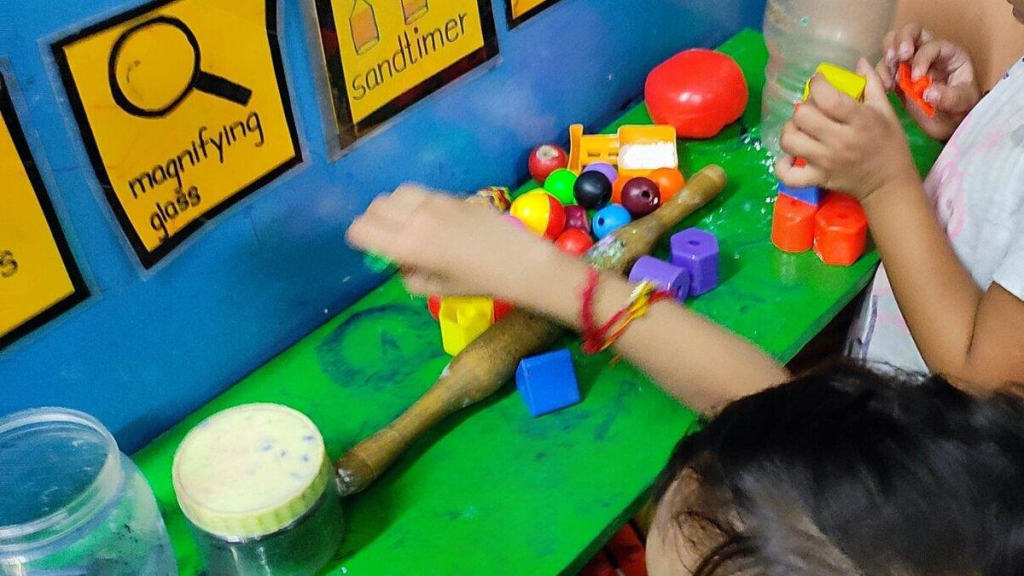
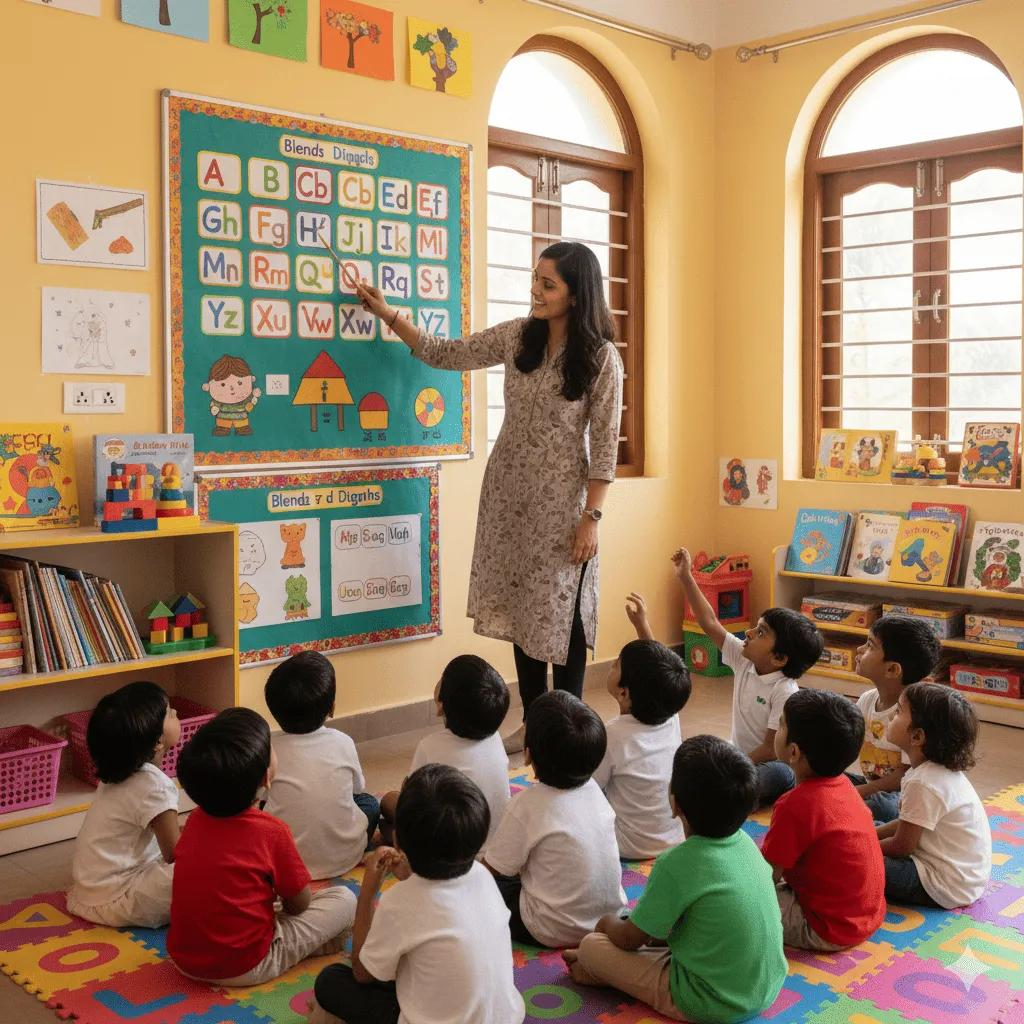
Children:
- Move every 30–40 minutes
- Meet different teachers
- Experience different environments
❓ Why Workstation Learning? (The WHY)
Because children today:
- Need movement
- Need stimulation
- Need interaction
- Need variety
👉 Sitting in one place for long periods no longer works.
🧠 What Changes Did We Observe?
🌟 Social Development
- Children started interacting more
- They became comfortable meeting new teachers
🌟 Emotional Growth
- Reduced hesitation
- Increased confidence
🌟 Academic Understanding
- Concepts were understood—not memorised
- Learning became meaningful
⏰ When Should It Be Implemented?
👉 Ideally from Kindergarten stage
Because:
- Habits are formed early
- Adaptability is higher
- Social skills begin here
📍 Where Can It Be Implemented?
- Schools with space → Full workstation model
- Limited space → Rotational classroom setup
👉 It is adaptable.
⚙️ How It Works (The HOW)
Step 1: Design Learning Zones
Each subject has its own identity:
- Visuals
- Materials
- Theme
Step 2: Assign Teachers by Strength
👉 Not every teacher has to teach everything.
- One excels in storytelling
- One in numeracy
- One in phonics
Step 3: Create Rotation Plan
Children move based on timetable.
Step 4: Use Activity-Based Learning
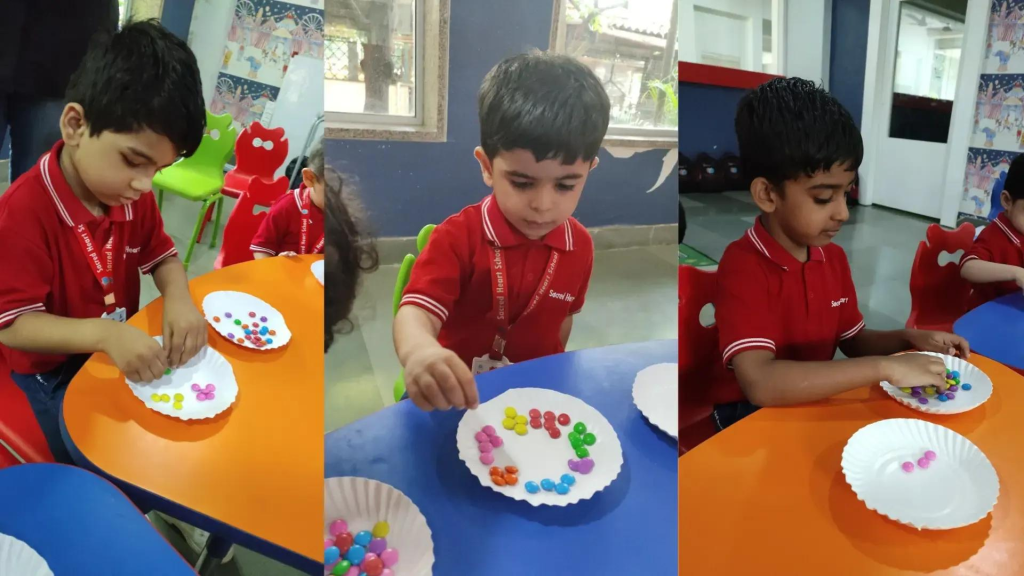
- Hands-on
- Discovery-based
- Movement-driven
🔍 Which Learning Approaches Does It Combine?
Workstation learning is a powerful blend of:
🌱 Kindergarten Approach
- Play-based learning
- Social interaction
- Joyful engagement
🧩 Montessori Approach
- Hands-on materials
- Independent exploration
- Concept clarity through experience
🎨 Reggio Emilia Approach
- Environment as teacher
- Learning through surroundings
- Creativity and expression
👉 Together, this creates a holistic learning experience
⚠️ Challenges We Faced (And What We Learnt)
When we introduced the Workstation-Based Learning model, the resistance was real—and understandable.
Change in education is never easy, especially when it challenges long-followed practices.
❗ Initial Concerns We Encountered
- Teachers questioned the need for change
- Parents were unsure about its effectiveness
- The system felt unfamiliar and “too different.”
- Movement between classrooms raised safety concerns
- Coordination among multiple teachers seemed difficult
💬 A Common Question
“If the class teacher is not teaching all subjects, how will she understand the overall development of the child?”
🧠 Our Response (What Actually Works)
This model does not reduce responsibility—it expands it.
👉 Instead of one teacher managing everything,
👉 all teachers collectively take responsibility for every child.
🤝 Collaboration Becomes the Key
For this system to work:
- Teachers must regularly communicate and share observations
- Each child’s progress is discussed across subjects
- Strengths and areas of improvement are collectively identified
🌟 What We Observed
Initially:
- It felt complex
- Coordination seemed overwhelming
But gradually:
✔ Teachers became more connected
✔ Understanding of each child became deeper
✔ Responsibility became shared—not isolated
❗ Another Concern
“If children are moving and something happens—who is responsible?”
💭 A Shift in Mindset
Why should responsibility be limited to one teacher?
👉 Every child in the school is our collective responsibility
- Safety protocols are established
- Teachers supervise transitions
- Children learn discipline through structured movement
🌱 The Bigger Perspective
We are not just managing classrooms.
👉 We are shaping the future.
❗ Teacher Perspective
“I am a KG teacher. I can teach all subjects.”
🧠 Reality Check
Yes, a teacher can teach all subjects.
But the question is:
👉 Can every subject be taught with the same depth, passion, and expertise?
🌟 What We Experienced
When teachers focused on their strengths:
- Storytelling became more expressive
- Phonics became more structured
- Numeracy became clearer
- Activities became more meaningful
🎯 The Shift
From:
- One teacher doing everything
To:
- Each teacher doing something exceptionally well
⚠️ Additional Challenges We Faced
- Time table planning required precision
- Initial classroom management needed training
- Parents needed orientation and trust-building
- Teachers had to step out of comfort zones
🌟 But Here’s What Changed
Once the system settled:
✔ Classrooms became more dynamic
✔ Children looked forward to movement
✔ Learning became engaging
✔ Social skills improved significantly
🚀 Why Change is Necessary
If we continue:
- Same classroom
- Same teaching pattern
- Same expectations
👉 We may fail this generation.
This generation needs movement, interaction, and meaning—not just instruction.
🤝 A Collective Responsibility
This is not just about schools.
It involves:
- Teachers
- Parents
- Leadership
- Community
🌿 Final Thought
Workstation-Based Learning is not just a method.
👉 It is a mindset shift.
From:
- Teaching → Facilitating
- Memorising → Understanding
- Sitting → Experiencing
🎯 Action Reflection
Ask yourself:
👉 Are children learning actively—or just sitting passively?
👉 Are we preparing them for exams—or for life?
🌱 Closing Note
This journey was not easy—but it was meaningful.
And if one classroom can transform, many more can.
🌿 Final Reflection
Every new system feels difficult in the beginning.
But when:
- Teachers collaborate
- Parents trust the process
- Schools stay consistent
👉 Transformation becomes visible.
Change is not about replacing the old—it is about improving what children truly need today.


Leave a comment